
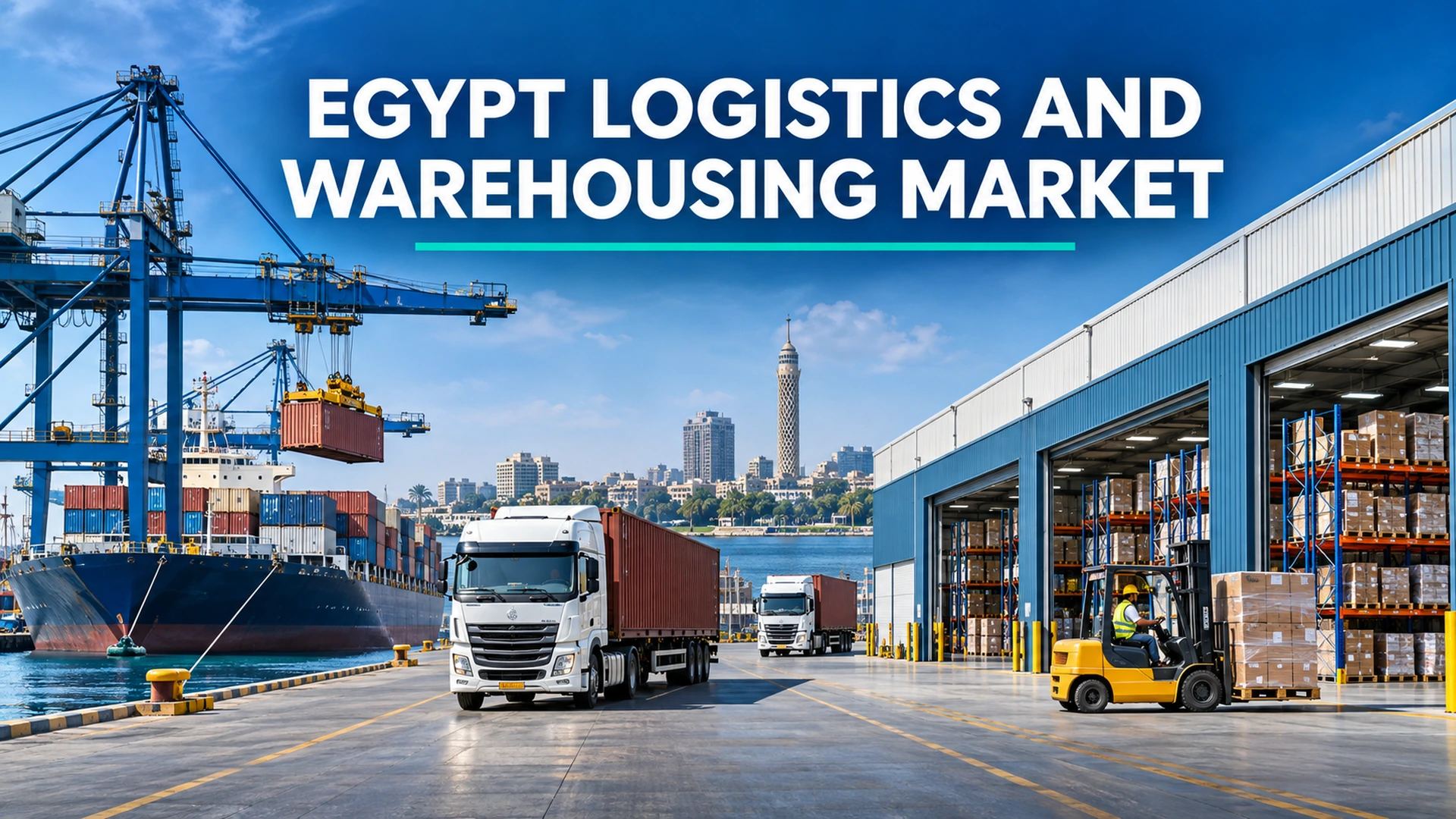
At a Glance
- Market value: USD 13,475 million in 2025
- Projected value: USD 18,342 million by 2031
- Forecast CAGR: 5.27% (2026‑2031)
- Historical CAGR: 6.75% (2020‑2025)
- Dominant region: Greater Cairo
- Fastest‑growing segment: Business Model
- Total players: ~1,200
What Is Changing in the Egypt Logistics and Warehousing Market?
The market is shifting from a volume‑driven freight anchor to a value‑added, integrated logistics ecosystem. While freight transportation still accounts for the largest revenue pool, the rapid expansion of contract logistics, specialized warehousing and cold‑chain services is redefining profit centers. This transition is underpinned by a national transport plan that adds rail, river and seaport capacity, and by a digital commerce surge that creates new fulfillment and reverse‑logistics demand. Egypt Logistics and Warehousing Market is projected to grow from USD 13,475 million in 2025 to USD 18,342 million by 2031.
Why Is Integrated Corridor Development Important for the Egypt Logistics and Warehousing Market?
Impact on Market Demand
Seven integrated logistics corridors slated for 2025 connect industrial, agricultural and mining zones with maritime gateways, creating a multimodal backbone that fuels inland freight, warehousing and contract‑logistics demand. The FY2025/26 transport plan targets 11 million tons of annual rail freight capacity, 8 million tons of river freight capacity and 292 million tons of seaport cargo‑handling capacity. These infrastructure upgrades expand the addressable market beyond traditional port‑perimeter activities, encouraging shippers to outsource storage, customs and fulfillment to providers with corridor‑linked capabilities.
Impact on Competition
Operators that can leverage corridor connectivity—by offering bonded storage, multimodal drayage and end‑to‑end visibility—gain a competitive edge. The report notes that organized providers with technology‑enabled visibility, specialized warehouse formats and strong customs execution are positioned to capture above‑average value as customers consolidate logistics functions under fewer contracts. Consequently, fragmented spot‑procurement models are losing market share to integrated contract‑logistics providers.
Impact on Market Growth
Infrastructure‑led growth decouples revenue expansion from pure line‑haul volume. The forecast assumes “greater monetization of logistics infrastructure through contract logistics, specialized warehousing and inland distribution rather than relying solely on higher line‑haul freight volumes.” This shift underlies the 5.27% forecast CAGR, even as historical growth slowed from 9.17% in 2022 to a steadier 5.3% in 2024‑2025.
What Does the Ken Research Report Reveal About Market Opportunities?
Fastest‑Growing Segment: Business Model
Business Model is identified as the fastest‑growing segmentation lens. Shippers are moving from fragmented spot procurement toward outsourced, digitally managed logistics relationships. Integrated Contract Logistics Providers—combining warehousing, fulfillment, transport coordination and inventory visibility—are the strongest growth sub‑segment. Digital logistics platforms and specialized operators also gain relevance where customers value transparency and flexible capacity.
Specialized Warehousing and Cold‑Chain for Healthcare
Healthcare cold‑chain logistics present a high‑value niche. EPx Logistics operates 11 sites with an additional six pipeline locations in 2026, supported by 162+ company‑owned transport vehicles and 100% inventory‑management outsourcing capability. These assets enable regulated customers to outsource inventory planning, distribution and proof‑of‑delivery, creating recurring revenue streams beyond basic storage.
E‑Commerce Fulfillment and Digital Last‑Mile
Digital commerce is a catalyst. Egypt recorded 96.3 million internet users and 81.9% internet penetration in early 2025, yet only 8.3% of consumers were regular online purchasers—indicating a large runway for organized fulfillment. The Digital Egypt program targets 1.5 million rural homes for fiber connectivity and upgrades 1,200 post offices, expanding the physical network for payments, pickup and distributed customer‑service models. This infrastructure supports e‑commerce sellers, retailers and parcel networks seeking end‑to‑end fulfillment solutions.
What Does the Market Shift Mean for Businesses?
Aftermarket and Recurring Revenue Opportunities
Interpretation: The report suggests that operators who expand into contract logistics, cold‑chain warehousing and customs‑enabled services can generate higher-margin, recurring revenue. The projected 200,000 sqm local warehousing footprint in 2026 provides space for value‑added services such as kitting, quality checks and inventory management, which increase customer stickiness and improve unit economics.
Market Adoption and Execution Challenges
Interpretation: While infrastructure upgrades are promising, execution hurdles remain. Customs release times—10.86 days for LCL versus 8.52 days for FCL in 2024—highlight documentation friction that can erode service levels. Additionally, high financing costs (19.00% overnight deposit rate in July 2026 and 20.6% weighted corporate loan rate in May 2026) raise hurdle rates for warehouse construction and fleet renewal, potentially slowing capital‑intensive expansion.
What Should Egypt Logistics and Warehousing Market Participants Watch Next?
- Progress of the seven integrated logistics corridors and 33 planned dry ports.
- Adoption rates of digital fulfillment platforms amid rising internet penetration.
- Impact of Red Sea and Suez route disruptions on maritime‑linked logistics revenue.
- Evolution of customs processing efficiency and Green Channel utilization.
- Financing environment trends affecting capex for warehousing and fleet upgrades.
How Can Businesses Apply These Market Findings?
Operators should align their network design with the seven integrated logistics corridors slated for 2025. By situating warehouses, bonded storage facilities, and cross‑docking hubs near corridor nodes, firms can capture the higher utilization rates projected for rail, river and seaport freight. The FY2025/26 transport plan’s target of 11 million tons of rail freight and 292 million tons of seaport handling capacity expands the addressable market beyond traditional port‑perimeter activities. Companies that embed multimodal drayage services into their contracts will be able to offer shippers end‑to‑end visibility, reduce dwell times, and command premium fees for the added reliability.
Investments in technology‑enabled fulfillment platforms are essential to tap the digital commerce runway. With 96.3 million internet users and 81.9% penetration in early 2025, yet only 8.3% regular online purchasers, the gap represents a sizable future demand for organized last‑mile solutions. Firms that develop scalable e‑commerce fulfillment centers—complete with pick‑pack, returns processing, and real‑time inventory tracking—can convert sporadic online orders into recurring revenue streams. Integration of customs‑clearance modules within these platforms will also mitigate the documented release‑time gaps (10.86 days for LCL versus 8.52 days for FCL in 2024), enhancing service levels for cross‑border sellers.
Specialized warehousing, particularly cold‑chain capabilities for healthcare and perishable goods, should be prioritized as a high‑margin niche. The market’s shift toward contract logistics and value‑added services means that operators offering temperature‑controlled storage, kitting, and quality‑inspection functions will differentiate themselves from spot‑procurement competitors. Leveraging the projected 200,000 sqm local warehousing footprint in 2026, firms can allocate dedicated zones for regulated products, thereby attracting pharmaceutical and biotech clients seeking outsourced inventory‑management solutions.
Financial structuring must reflect the elevated cost of capital observed in mid‑2026 (19.00% overnight deposit rate and 20.6% weighted corporate loan rate). To sustain expansion, businesses should explore project‑finance models that tie repayment to asset utilization metrics, such as corridor throughput or warehouse occupancy rates. By aligning debt service with the forecast 5.27% CAGR and the anticipated growth in contract‑logistics volumes, companies can mitigate financing risk while capitalizing on the market’s transition from pure freight volume to integrated service monetization.
Interpretation: The convergence of corridor‑linked capacity, digital fulfillment demand, and specialized warehousing creates a strategic sweet spot for operators that combine multimodal connectivity, technology, and high‑value service offerings. Those that execute on these levers are positioned to capture above‑average returns as the Egypt Logistics and Warehousing market moves toward a more integrated, value‑added ecosystem.
Conclusion: Egypt Logistics and Warehousing Market Outlook
The Egypt Logistics and Warehousing Market is poised to reach USD 18,342 million by 2031, driven by a 5.27% CAGR anchored in corridor‑linked capacity, digital commerce growth and a shift toward integrated, high‑value logistics services. Operators that invest in specialized warehousing, contract logistics and technology‑enabled visibility are likely to capture the most sustainable upside, while navigating customs friction and financing constraints will be critical to execution.